If we tear out ten failing retaining walls, eight of them failed for the same reason: water. The blocks were fine. The footing was fine. The grade was reasonable. But the drainage was wrong, missing, or clogged — and water did what water always does, which is win.
Here's the thing most homeowners don't realize: a retaining wall doesn't really hold back soil. It holds back saturated soil. Dry soil weighs about 100 pounds per cubic foot. Wet soil can push past 130 pounds per cubic foot, and the water itself adds hydrostatic pressure on top of that. A wall that's perfectly sized for dry conditions can be 30–50% over its design load when the soil is fully saturated.
Drainage is what makes the difference. Done right, water moves through the system harmlessly and the wall never sees those higher loads. Done wrong, every storm is a stress test.
The five layers of a properly drained wall
From the back of the wall outward toward the soil, here is what a correctly built drainage system looks like on a Cambridge, Nicolock, stone, or wood wall.
1. The wall itself, with weep holes or open joints
Block systems like Cambridge and Nicolock have small gaps between blocks that allow water to weep through naturally. Mortared stone walls and timber walls need deliberately installed weep holes — typically every 6–10 feet along the bottom course — so water has somewhere to exit. A wall with no exit path is a dam, not a retaining wall.
2. Geotextile (filter) fabric
Behind the wall, against the back face of the blocks, we install a non-woven geotextile fabric. This fabric is the single most underrated component in the whole system. It lets water pass through but stops fine soil particles from migrating into the gravel layer. Without it, the gravel slowly clogs with silt over the course of 5–10 years and the drainage stops working.
3. Clean drainage gravel (12+ inches)
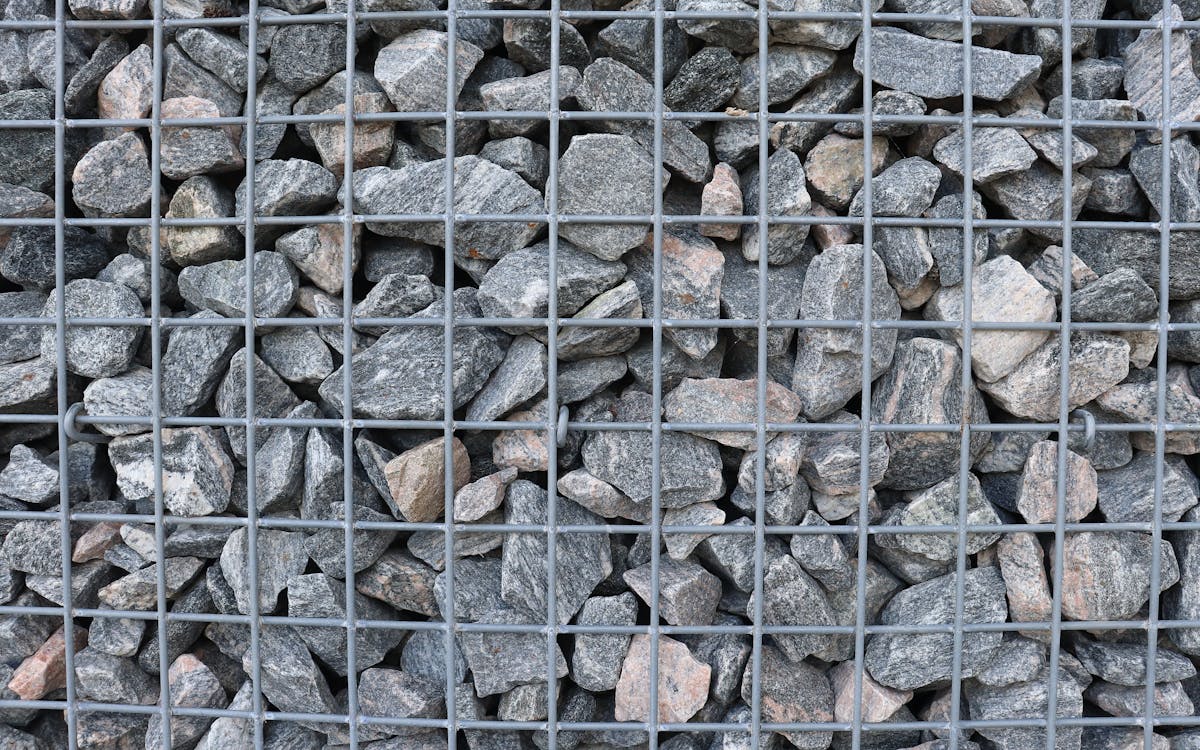
Behind the fabric: at least 12 inches of clean 3/4-inch crushed stone, rising the full height of the wall. This is the highway that water uses to travel down to the drain pipe. "Clean" matters — fines and dust mixed in with the stone defeat the purpose. We spec washed angular stone, never round pea gravel.
4. Perforated drain pipe at the base
At the bottom of the gravel layer, sitting on a slight pitch, runs a 4-inch perforated PVC pipe wrapped in filter sock. This is what collects all the water moving down through the gravel and carries it to a safe exit point. Pitch matters — we install at a minimum 1% slope, ideally 2%.
5. Outlet to daylight, dry well, or storm system
The drain pipe has to go somewhere. The best option is daylight — running the pipe to where it can simply exit at a lower point on the property, well away from the wall and the foundation. When that's not possible, we run to a dry well sized for the catchment area, or in some cases tie into the property's existing storm drain system.
What about the surface, above the wall?
The drainage layer behind the wall handles water that's already in the soil. But you also want to keep as much water as possible from getting into that soil in the first place. Three things matter on the surface:
- Positive slope away from the wall. The ground above the wall should pitch away from it — not toward it. We want surface water to head somewhere else before it has a chance to soak in.
- A swale or surface drain at the top. On heavily wooded lots or properties uphill from the wall, a simple swale or French drain at the top of the slope can intercept surface water and route it around the wall entirely.
- Capping the top of the wall. Cap blocks (or capping flat stones, or a finished top course) keep water from entering directly through the top of the wall structure.
Common drainage failures we see
If you have an existing wall and you're trying to figure out why it's struggling, these are the things we look for first:
No filter fabric, or torn fabric
Soil migrates into the gravel layer. You'll see fine sediment streaks running down the face of the wall after storms. The gravel slowly stops draining. Often a full rebuild — once the gravel is silted up, you can't fix it from the outside.
Drain pipe with no outlet
Pipe ends in a buried cap, or daylights into a wet area. Water collects and never leaves. The wall sees full hydrostatic load every time it rains. Sometimes fixable by re-routing the outlet; sometimes not.
Roof gutters dumping behind the wall
Sounds dumb but it's surprisingly common. A downspout from the house releases water within a few feet of the wall, and the drainage system gets overwhelmed every storm. Easy fix: extend the downspouts, or tie them into a proper drainage line that runs around the wall.
Wrong gravel
"Drainage gravel" that's actually mostly sand and fines. Looks fine on day one, doesn't drain on day 100. The only way to find out is to dig a small test pit behind the wall.
Why we obsess over this
Building a wall is the visible part of the job — and the part most homeowners use to judge quality. But what's behind the wall is what determines whether you have a 50-year wall or a 10-year wall. We spend more time and money on drainage than most contractors because we've torn out enough failed walls to know exactly how the cheap ones come apart.
If you're getting quotes on a new wall, ask each contractor specifically: what drainage layer are you installing, what does the gravel spec say, where does the pipe outlet to, and is geotextile fabric included? If the answer is vague, that's the contractor whose wall will be on this list of failures in twelve years.