There is no single "best" retaining wall material. There is only the best material for your specific slope, soil, drainage situation, and budget. We build with four systems — Cambridge engineered block, Nicolock engineered block, natural stone, and pressure-treated wood — and each one is the right answer somewhere on the North Shore.
The shortest version of this article is: if you have a serious load-bearing application, you want an engineered segmental block system from Cambridge or Nicolock. If you want the most natural look and you have the budget, you want stone. If you have a low, simple wall and a tight budget, wood still has a place. Below is the longer version — what each system is, what it does well, and where it falls short.
Cambridge Pavingstones — the engineered workhorse
Cambridge is one of the two block systems we build with most often, and for good reason. Their MaytRx and Olde English wall systems are engineered, tested, and rated for specific load and height conditions, which means we can design and build with confidence on slopes where guesswork isn't an option.
Cambridge blocks are dense, dimensionally consistent, and integrate cleanly with geogrid soil reinforcement, which is what makes tall walls — over four feet — possible without massive footings. Their ArmorTec finish protects the surface texture and color from fading, which matters more than you'd think after fifteen North Shore winters of UV and salt air.
Where Cambridge wins
- Tall walls and tiered systems — anything over 4 ft, anything multi-tier, anything that needs to be permitted.
- Predictable construction — every block is the same, which keeps labor cost down and schedule on track.
- Long-term color stability — the ArmorTec finish holds up to North Shore weather better than untreated concrete.
- Strong design library — multiple block faces, capstones, and curve blocks that let us match the architecture of the house.
Nicolock — the local Long Island block
Nicolock is the other engineered block system we recommend often, and there's a hometown advantage worth mentioning: Nicolock is manufactured right here on Long Island. That means shorter supply chains, faster restocks if a project needs more block mid-build, and direct access to their engineering team when we need to validate an unusual design.
Their Para-Wall and Olde Towne systems compete head-to-head with Cambridge for most projects. Nicolock's Paver Shield finish is similar in concept to Cambridge's ArmorTec — a sealed surface that resists fading, salt, and staining.
Where Nicolock wins
- Local supply — same-week material on most jobs, which matters when weather windows are tight.
- Color match to Long Island palettes — Nicolock's color range is tuned to homes on Long Island in a way that often blends better than national brands.
- Strong warranty — limited lifetime on the block itself for residential applications.
- Cost-competitive — comparable performance to Cambridge, sometimes a few percent less depending on color and finish.
Natural stone — the look nothing else can copy
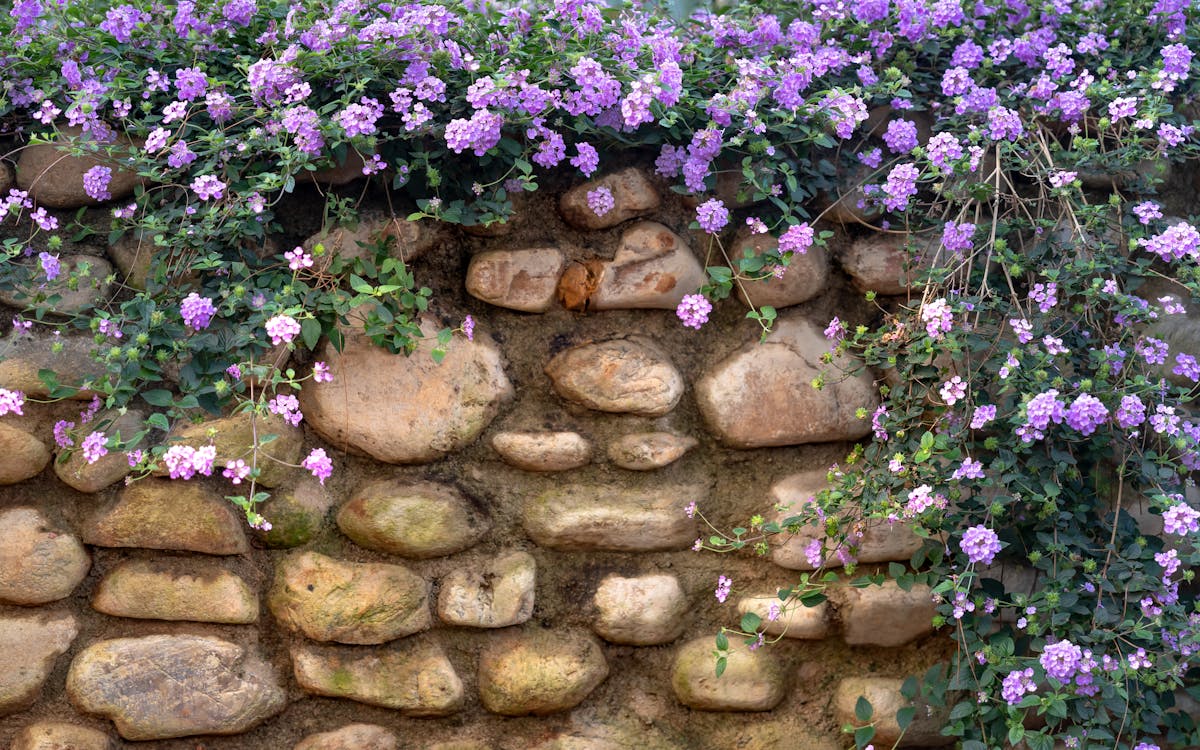
A real natural stone retaining wall — fieldstone, bluestone, or quarried granite — has a presence that no manufactured block can replicate. The irregular faces, the mix of warm and cool tones, the way moss and patina settle into the joints over decades: stone ages into the property instead of away from it.
That said, natural stone is a different animal from segmental block. Each stone is unique, which means construction is slower, more skill-dependent, and more expensive. For walls under three or four feet — garden walls, planter walls, low terraces — natural stone is often the right call. For tall load-bearing walls, we'll typically build the structural wall in Cambridge or Nicolock and face it with natural stone if the budget allows.
Where natural stone wins
- Aesthetic on traditional homes — colonials, Tudors, and shingle-style North Shore homes look right with stone.
- Garden & planter walls — under 3 ft, with curves and irregular shapes.
- Lifespan — a properly built dry-laid or mortared stone wall can last a hundred years.
- Resale — stone walls are an asset that appraisers price in.
Pressure-treated wood — the budget option that still has a job
Wood retaining walls — typically built from 6×6 pressure-treated timbers with deadman tiebacks — are the least expensive option, and on the right project they're still the right answer. We use wood walls most often on rural or wooded lots where the look is appropriate, on temporary slope-holding applications, and on short walls where engineered block would be overkill.
The honest truth about wood walls is that they have a finite lifespan. Pressure-treated timber on Long Island typically lasts 15 to 25 years before the boards at and below grade start to rot. That's a real cost — a wood wall that needs replacement after 20 years is more expensive over its life than a Cambridge or Nicolock wall that lasts 50.
Where wood wins
- Budget-constrained projects — typically 30–40% less than block per linear foot.
- Wooded or rural-style properties — where the warm look fits.
- Short walls under 3 ft — where lifespan and load aren't critical.
- Temporary or staged work — holding a slope while you save up for a permanent wall.
So how do we actually choose?
When we walk a property, we're answering five questions in our head before we recommend a material:
- How tall does the wall need to be? Anything over 4 ft is almost always Cambridge or Nicolock.
- What's the soil class and drainage situation? Wet, clay-heavy slopes push us toward engineered systems with proper drainage capacity.
- What does the house look like? A 1920s colonial wants stone. A modern build can carry block beautifully.
- What's the budget — honestly? We'll tell you what each system costs and what it gets you. No upsells.
- How long do you want it to last? If you're staying in the house, build it once, build it right.
Most North Shore projects we do end up being Cambridge or Nicolock for the structural wall, sometimes with a natural stone facing on the visible portions. It's not the cheapest combination — but it's the one that holds up, looks right, and stops being a worry the day it's installed.